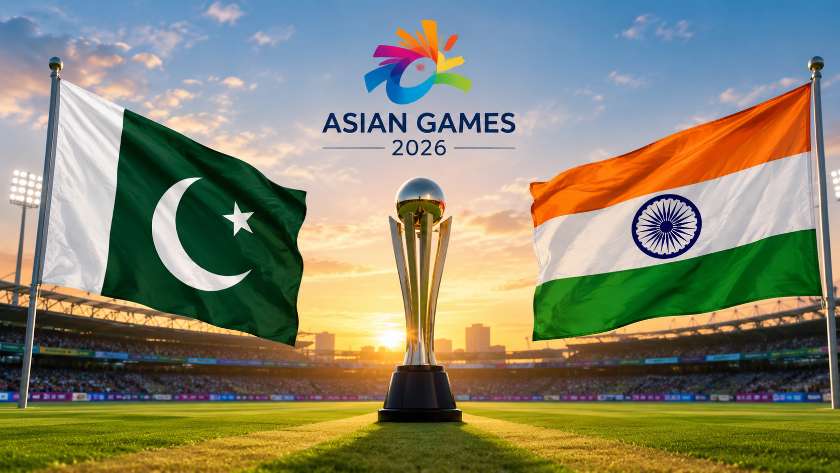
India vs Pakistan: asian games cricket final ends without handshake
India beat Pakistan by 19 runs in the Asian Games cricket final, but the teams did not shake hands before or after the match.
Nisshin, Japan — October 3, 2026: The India-Pakistan cricket rivalry produced another closely watched moment at the Asian Games on Saturday as the two teams completed their men's T20 gold-medal final without the customary exchange of handshakes.
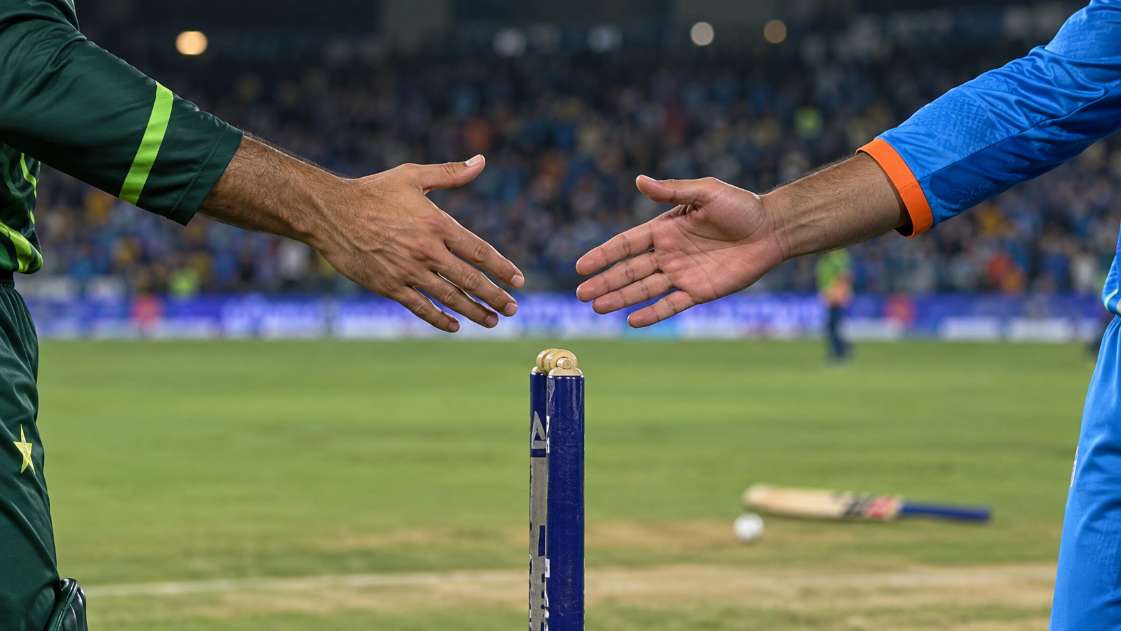
India defeated Pakistan by 19 runs to retain the men's cricket gold medal, but the result was only part of the story. The absence of the traditional greeting before and after the match once again highlighted the unusual nature of recent India-Pakistan cricket encounters.
No Handshake Before the Final
India captain Shreyas Iyer and Pakistan captain Sahibzada Farhan acknowledged each other before the toss, but the two captains did not exchange the customary handshake.
Iyer won the toss and elected to bat first as the teams prepared for one of the most anticipated cricket matches of the Asian Games.
The absence of the handshake was noticeable, particularly because athletes from India and Pakistan competing in several other sports at the same Games continued to follow traditional gestures of sportsmanship.
A Different Picture in Other Sports
The contrast was especially visible in squash, hockey, volleyball and table tennis.
In squash, India's Abhay Singh and Pakistan's Muhammad Irfan shook hands after their men's singles semifinal. Singh won the match 11-3, 12-10, 11-6, but the competitive nature of the contest did not prevent the players from acknowledging each other afterward.
Hockey provided another example. India defeated Pakistan 4-3 in a dramatic semifinal, but players from both teams shook hands after the match.
Pakistan coach Tahir Zaman also exchanged handshakes with members of the Indian team.
In volleyball, Pakistan defeated India 3-0, yet the result did not prevent a display of sportsmanship. Pakistani players were seen consoling their Indian opponents after the match, including Pakistan's Musaweer Khan comforting Indian player Amit Balwan Singh.
Table tennis also followed customary post-match interactions, with players from both countries exchanging handshakes or palm taps with opponents, coaches and officials.
The scenes created a striking contrast with the cricket final, where the handshake remained absent.
Cricket Rivalry Continues to Follow a Different Path
The no-handshake practice has become a recurring feature of recent India-Pakistan cricket meetings.
The practice began receiving significant attention during the 2025 Asia Cup and continued in subsequent encounters. The women's teams also skipped the customary greeting during their Asia Cup meeting in September 2026.
The issue has attracted additional attention because India-Pakistan cricket is played against the backdrop of strained relations between the two countries.
However, the absence of a handshake did not lead to a major confrontation during Saturday's final.
No Major Controversy During the Match
Despite the attention surrounding the rivalry, the match itself remained largely focused on cricket.
There were no major incidents between the teams, and both sides maintained their concentration on the contest.
After the final, Indian players moved towards their dressing room without approaching the Pakistani side. Pakistan's players also left the field after shaking hands with the umpires, with no team-to-team interaction taking place.
The lack of a handshake was therefore visible, but the final did not develop into a wider confrontation.
Saim Ayub's Celebration Adds Another Moment
The final contained a few moments of competitive intensity.
Pakistan all-rounder Saim Ayub dismissed India's 15-year-old opener Vaibhav Sooryavanshi after the teenager had struck two sixes from nine deliveries.
Ayub then celebrated the wicket with a cradle-style gesture, holding his arms as though rocking a baby.
The dismissal came during India's aggressive start, but Abhishek Sharma continued the attack and played a major role in India's eventual total.
India Posts 211 Before Defending the Total
India made a strong start after choosing to bat.
Abhishek Sharma scored 61 from 28 deliveries, while Tilak Varma added an unbeaten 51 from 22 balls. India finished with 211/6.
Pakistan mounted a strong response, with Hasan Nawaz scoring 96, but India eventually restricted Pakistan to 192/6.
India won by 19 runs, securing its second consecutive men's Asian Games cricket gold medal.
Pakistan finished with silver, while Sri Lanka claimed the bronze medal.
Medal Ceremony Avoids a Major Dispute
The attention surrounding the final continued into the medal ceremony because recent India-Pakistan cricket events have included disputes over official presentations.
Asian Cricket Council President Mohsin Naqvi, who is also Pakistan's interior minister, did not attend the Asian Games final, citing prior commitments.
His absence also meant there was no repeat of the recent Asia Cup trophy-presentation dispute involving the Indian and Pakistani cricket authorities.
The medal ceremony itself passed without a major incident.
There was, however, an awkward moment during the group photograph involving the three medal-winning teams. India stood in the middle, while Pakistan and Sri Lanka were expected to take positions on either side.
The Pakistani players appeared uncertain about their position and briefly stepped down from the podium. Sri Lankan players also followed before the teams eventually assembled for the photograph.
Sportsmanship Beyond Cricket
The Asian Games final offered a complicated picture of the India-Pakistan sporting rivalry.
Cricket once again produced a visible absence of the traditional handshake. Yet the same Games provided several examples of Indian and Pakistani athletes competing intensely while still showing respect to one another.
A handshake is only one symbol of sportsmanship, but its absence can become particularly noticeable in a rivalry watched by millions.
The events across the Asian Games show that competition between athletes from the two countries does not always produce the same interactions.
The Scoreboard Tells One Story, the Rivalry Another
India's 19-run victory gave the team another Asian Games cricket gold medal.
But the final will also be remembered for what happened around the cricket itself.
There was no handshake between the captains before the match and no team-to-team handshake afterward. At the same time, the game avoided a major confrontation, and the medal ceremony proceeded without a repeat of the recent Asia Cup controversy.
Meanwhile, athletes from India and Pakistan in other sports demonstrated that fierce competition can coexist with traditional gestures of respect.
The India-Pakistan cricket rivalry therefore remains more than a contest between two teams. Every meeting carries its own sporting and diplomatic context, making even a simple handshake — or its absence — part of the story.